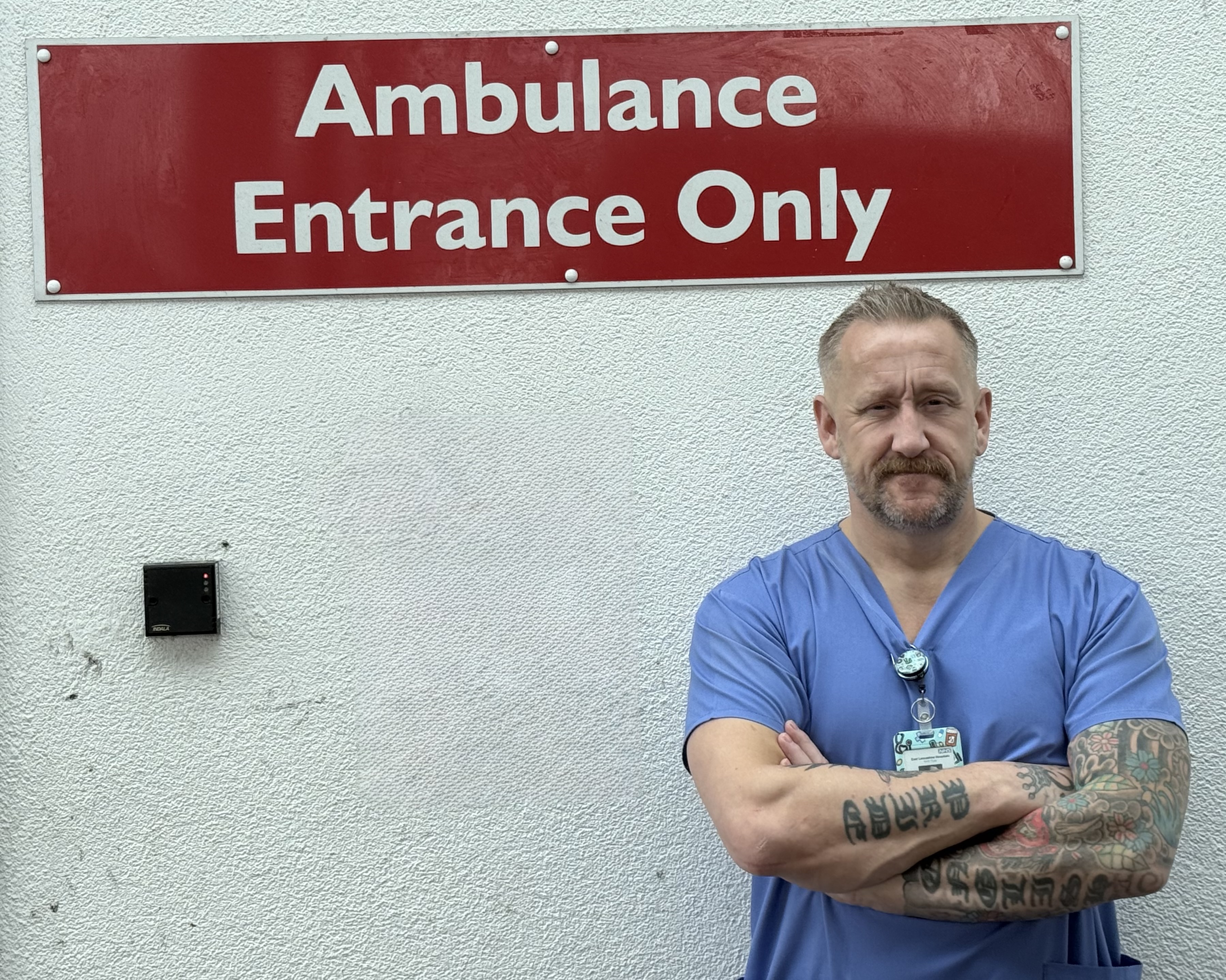
 Paul Tunstill has swapped military life for the fast-paced world of A&E nursing, thanks to an innovative training programme opening up new routes into healthcare careers.
Known to colleagues as “Snowy”, Paul was part of the first cohort to qualify through the BSc (Hons) Nursing with Registered Nurse (Adult) - Practice Based Pathway, delivered by the University of Lancashire and Lancashire Teaching Hospitals - a workplace-based programme, designed to widen access to nursing for people from non-traditional backgrounds.
Now working in the Emergency Department at Royal Blackburn Hospital, his journey is already inspiring others to consider a career in the NHS.
Unlike traditional university routes, the practice-based pathway allows learners to train primarily in a clinical environment, combining hands-on experience with academic study.
Starting in 2023, the programme aims to address workforce challenges while creating more flexible, inclusive routes into healthcare.
For Paul, who hails from Burnley, it provided an opportunity he otherwise would not have had: “I went to Blackburn with all the qualifications I’d gained over the years, but I was told I didn’t have enough points to qualify for the traditional route,” he said.
“They then told me about the practice-based pathway… that it was exactly the same nursing degree, just delivered in a slightly different way. I thought, ‘Yeah, no problem.’ That was really how I got started.”
Paul’s route into nursing followed a long and challenging journey. After spending 20 years in the Army, he was injured in Afghanistan in 2010 and medically discharged three years later.
In the years that followed, he faced significant physical and mental health challenges, including PTSD and fibromyalgia.
“Around 2015, I had a real downturn with PTSD. I barely left the house for about 18 months,” he said.
Gradually rebuilding his confidence through a range of roles, including working in a tax office, as a fly-tipping investigator, and later as a catering manager at Burnley General Hospital - Paul found himself drawn towards nursing.
“I’d been talking to my wife for a few years about it. I looked at what nurses were doing and thought, ‘I can do that,’” he said.
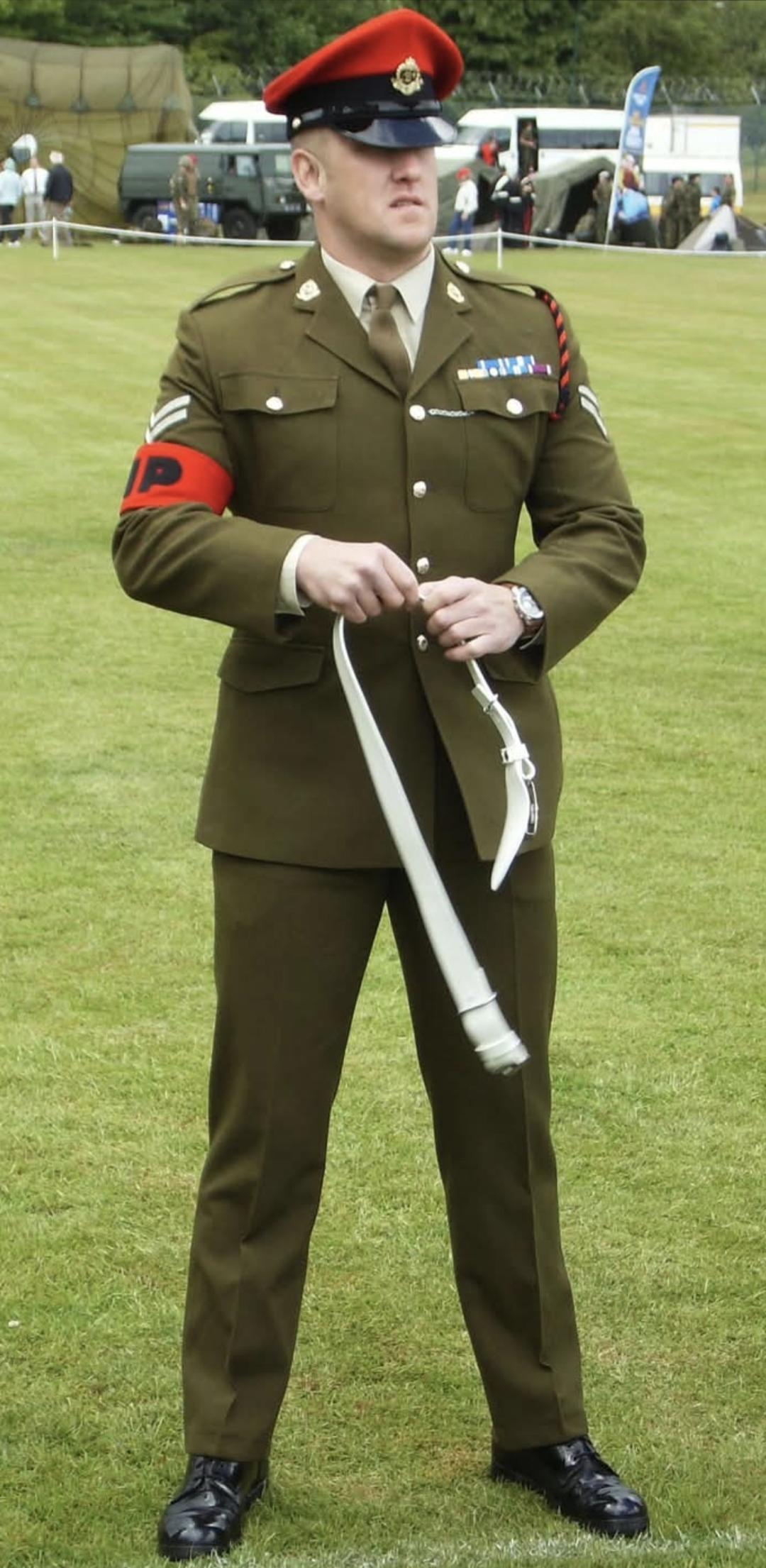 Starting the course in his mid-40s, Paul represents a growing number of people entering healthcare later in life.
“I think I was about 45 or 46 when I started,” he said. “Life experience counts for a lot. You approach situations differently and draw on other challenges you’ve faced - that can be a real strength in nursing.”
The structure of the practice-based pathway also sets it apart, with learners applying theory directly into practice throughout their training.
“We were on placement pretty much all year round,” Paul explained. “You could learn something at university and immediately put it into practice, rather than forgetting it before you got onto placement. You were always connected to both the university and your placement area.”
He described the experience as both demanding and rewarding: “It was fantastic. Don’t get me wrong, it was hard work and there were times when you questioned yourself. But you never really achieve anything if you stay in your comfort zone. Overall, I absolutely loved it.”
A key element of the programme is a Return to Study course, designed to prepare those who do not have the required entry criteria for a full university programme.
This helps to make the Practice-Based Pathway more accessible for students who have the capability to demonstrate the qualities and skills required. No healthcare experience or prior qualifications are needed to access the Return to Study programme.
Paul said: “It got you thinking and taught things like academic writing and study skills,” he said. “For me, it was a really positive experience.”
He believes the pathway is particularly valuable for those who may not have followed a traditional academic route: “I left school early with no qualifications… I wasn’t what you’d call an academic type.
“The practice-based pathway gives people like me a chance. Without it, I wouldn’t have been able to get into nursing at all.”
After qualifying, Paul was offered two roles and chose to work in the Emergency Department: "I like the pace of it. I enjoy being busy and I like the variety and unpredictability… for me, ED was perfect."
While 15 learners from the first cohort have now qualified, programme leads say awareness of the route remains a challenge.
“Even within healthcare, people don’t always fully understand what the pathway offers,” Kate Harrison, Head of Professional Education Development at Lancashire Teaching Hospitals, said.
“That’s why it’s so important to keep sharing stories like this - they bring the programme to life.”
Paul is keen to encourage others to consider the route: "Definitely - I’d recommend it,” he said.
“For people who may not have a traditional academic background, it can be a fantastic route into nursing.”
For details of the Practice-Based Pathway, please click here, or email study.nursing@lthtr.nhs.uk
The next intakes are January 2027 and September 2027 - the September 2026 course is full.