We believe that healthcare services should respond to the diverse requirements of everyone in our local community.
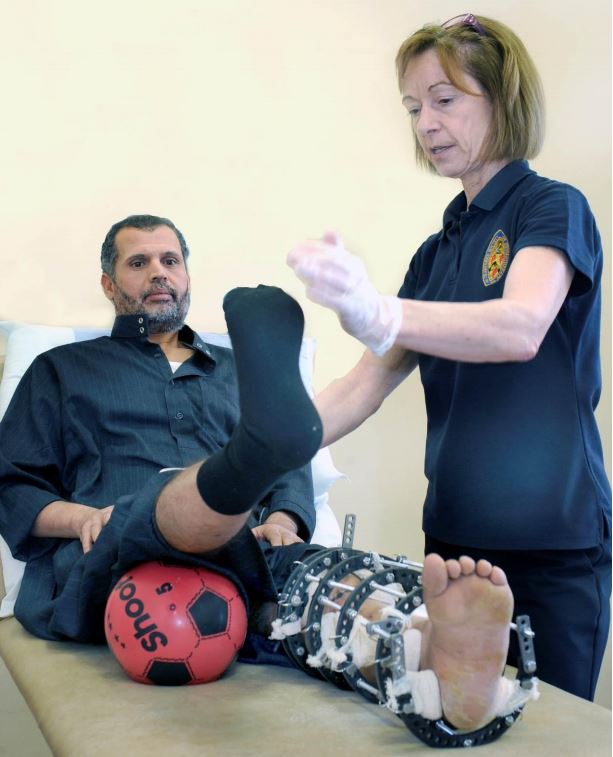
This means taking into account needs relating to age, gender, race, disability, religion, and sexuality.
Every policy we develop is subject to an equalities impact assessment to prevent unintentional discrimination.
We have been working with AccessAble 
to ensure our services and facilities are accessible to disabled people, and the loop system is widely available to support patients with hearing impairments.
The Hospital Passport helps us to ensure the healthcare needs of patients with learning disabilities are met, and multi-lingual phrase books and access to interpreters are available to support people who do not speak English.
We continuously monitor a range of workforce and patient statistics to identify any anomalies that could potentially indicate barriers to employment or access to healthcare.
Document Downloads
Compliance with the NHS statement on Information on Health Inequalities 2023-2034
Equality Strategy and our Equality, Diversity and Inclusion Strategy
Our Equality, Diversity and Inclusion Strategy sets out how we will create a more inclusive organisation for our colleagues, patients and communities. We want everyone to feel valued, respected and treated fairly, and to make being consciously inclusive part of everything we do. Our strategy explains the actions we are taking to improve people's experience of using our services and working at the Trust.
We are currently reviewing and updating our Equality, Diversity and Inclusion Strategy. A new version will be published here soon.
Equality Diversity and Inclusion Strategy Annual Report
As a public sector organisation, we must publish information each year about how we are promoting equality, diversity and inclusion and meeting our responsibilities under the Equality Act 2010. Our annual report highlights the progress we have made across the Trust over the last 12 months.
Combined Pay Gap Report
Any employer with 250 or more staff must publish gender pay gap data each year.
We produce a Combined Pay Gap Report covering gender, ethnicity and disability. This helps us better understand pay differences across our workforce and identify where action is needed.
By sharing this information and tracking progress, we aim to create a fairer and inclusive workplace for all colleagues.
NHS Workforce Disability Equality Standard (WDES)
The NHS Workforce Disability Equality Standard (WDES) is a data-driven report that helps NHS organisations to better understand the experiences of Disabled and non-Disabled staff. Completing the WDES is a requirement for NHS healthcare providers through the NHS Standard Contract.
We submit WDES data to NHS England each year. Completing the WDES helps us to evaluate staff experiences at our Trust. We use WDES data to make sure all staff are treated fairly and with respect, and to develop action plans to support areas where we can make things better.
NHS Workforce Race Equality Standard
The NHS Workforce Race Equality Standard (WRES) is a data-driven report that helps NHS organisations to better understand the experiences of staff. Completing the WRES is a requirement for NHS healthcare providers through the NHS Standard Contract.
We submit WRES data to NHS England each year. Completing the WRES helps us to evaluate staff experiences at our Trust. We use WRES data to make sure all staff are treated fairly and with respect, and to develop action plans to support areas where we can make things better.
Equality Delivery System
A key principle of the NHS is that ‘everyone counts’ – this is at the heart of the NHS Constitution and should be a principle that applies to everyone in the NHS. The EDS2 helps us as an organisation, in partnership with local stakeholders, to review and improve our performance for people with characteristics protected by the Equality Act 2010, and to support us in meeting the Public Sector Equality Duty.
Equality Impact Assessments
Further related links
Our Disabilities page.