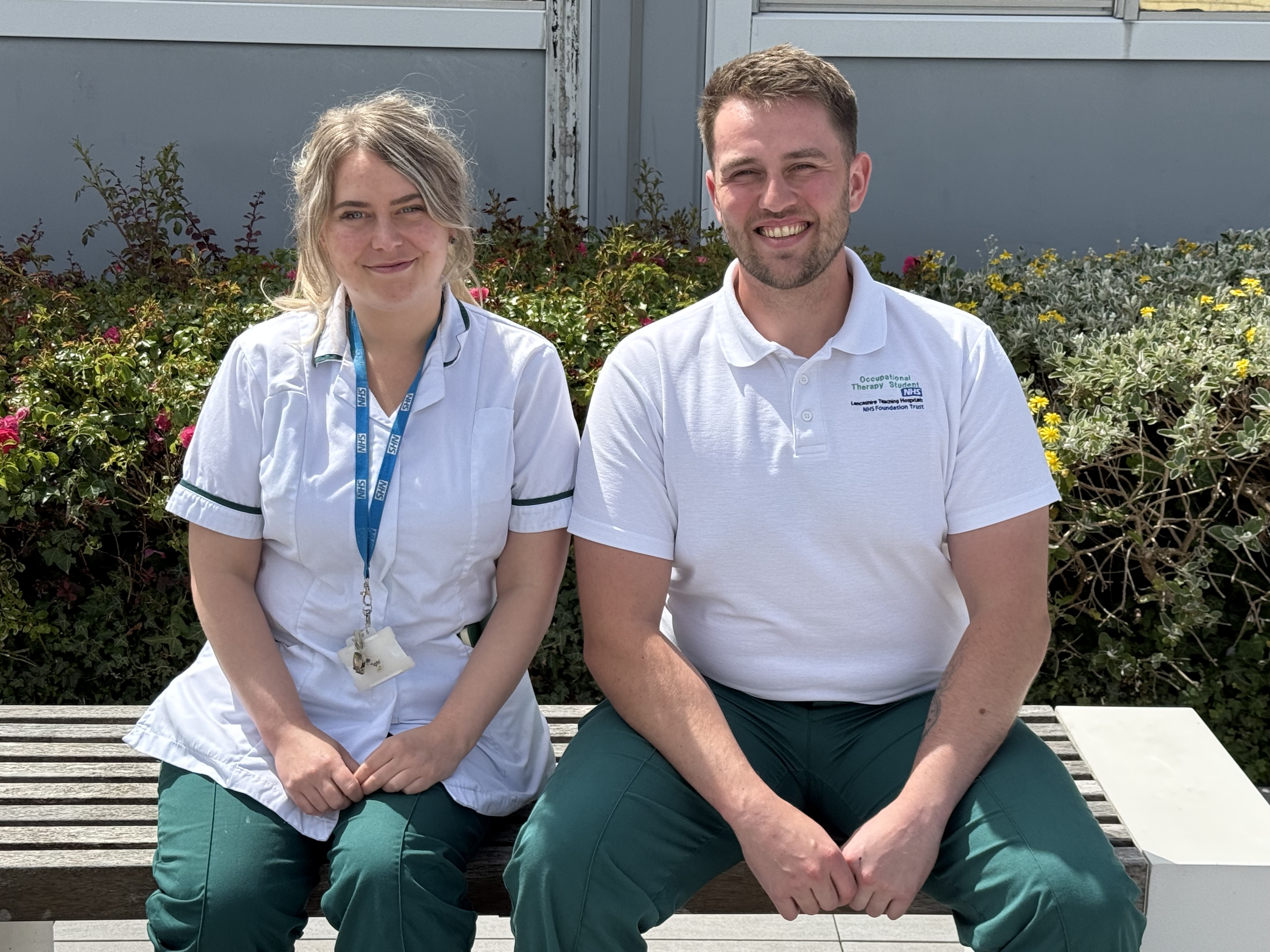
 Two trailblazing occupational therapists from Lancashire Teaching Hospitals are celebrating a major milestone after successfully completing their degree apprenticeships.
Both started their NHS careers in support roles before progressing through the apprenticeship route - a new initiative in the North West - to become registered Health and Care Professions Council occupational therapists.
For Sophie McLean, her journey began in housekeeping: "I didn't know about occupational therapy until I started working at Royal Preston Hospital in housekeeping.
"I was working on an orthopaedic ward when I first saw what occupational therapists did. I was watching patients who had been confined to bed gradually regain their independence and return home. Supporting people to get better really looked interesting to me."
Anthony Foye's route was similar: "I came into the Trust as a ward-based therapy assistant and gradually became more interested in the therapy side of things. I moved into a full-time therapy assistant role in neuro rehabilitation and then, when the apprenticeship opportunity became available, I applied."
The occupational therapy apprenticeship allowed both colleagues to continue working while studying for their degree. The three-year programme combined clinical work with university study, including placements and teaching blocks delivered both remotely and in person across the North West.
Although demanding, they say the benefits outweighed the challenges. "It was intense at times," Sophie admitted. "You've already got responsibilities, balancing work, family life, a mortgage, bills and academic studies all at once. There were definitely challenges, but it was worth it."
For both apprentices, returning to formal education was something they had never imagined themselves doing.
"I didn't finish my A-levels and got onto the course through my experience," Sophie added. "I never thought I'd be writing degree assignments, but it shows what you can achieve when you find something you're passionate about."
Anthony explained: "I left school with poor GCSEs, went to college for two weeks and left. If you'd told me back then that I'd go to university, I'd never have believed you. But when the opportunity came at the right time, I was ready for it."
Their achievements have made family and friends proud. "My parents still can't quite believe it," Anthony smiled, "With the greatest respect, they probably never thought I'd go to Uni."
The apprenticeship route has opened doors for existing support staff who want to progress without leaving employment.
Previously, many therapy assistants who aspired to become registered professionals had only one option - leaving work to study full time at university.
"This creates a different pathway," Sophie said. "We have no student loans or debt, you can continue earning, keep your NHS service and employment benefits, and qualify at the same time."
Anthony added: "It's a lot of hard work, but it is worth it definitely."
Now working in specialist clinical areas, both occupational therapists say the most rewarding part of the role is helping people regain independence and improve their quality of life. Occupational therapists play a vital role across the NHS, helping people of all ages overcome physical, mental and social challenges so they can remain independent and take part in the activities that are important to them, whether at home, in hospital or in the community.
"Occupational therapy is about helping people do the things they need and want to do," Anthony explained. "If someone has experienced a life-changing injury, we're there to help them find ways to continue living as independently as possible."
Sophie said: "You see people when they're at some of the most difficult points in their lives, and then you see the progress they make. That's incredibly rewarding."
However, they stress that occupational therapy is not only about recovery.
"Sometimes people aren't going to get better, and we know that. But there are still things we can do to improve quality of life," Sophie added.
"It might be providing specialist seating so someone can spend time with their family, go outside, or simply enjoy an ice cream with loved ones. Those things matter."
The qualification has opened up a wide range of future career opportunities, including specialist clinical practice, advanced roles and leadership positions.
Most importantly, it has allowed them to build careers they genuinely enjoy.
"When you stop and think about what we do, it's actually pretty amazing," Sophie reflected.
"We help people through some of the toughest times in their lives and support them to get back to doing the things that matter to them."
Anthony agrees: "I genuinely enjoy coming to work. At the end of the day, that's all you can really ask for."
Both highlighted the backing they received along the way: "The support we've had throughout the apprenticeship has been amazing," Sophie said. "Not just from the university, but from colleagues here in the Trust as well."
Studying for a degree while continuing to work in busy clinical environments required flexibility, understanding and encouragement from those around them.
"There were times when life was really busy and there was a lot going on outside of work as well as within the apprenticeship," Anthony explained. "But people genuinely wanted us to do well and supported us throughout."
Both were keen to recognise the role played by their managers, colleagues and mentors, particularly Head of Occupational Therapy Anne Tucker, who was a constant source of encouragement: "Anne has been absolutely brilliant. She's been so supportive and has fought our corner every step of the way. We really couldn't have asked for more. It really does feel like people have invested in us and wanted us to progress. That's made a huge difference."