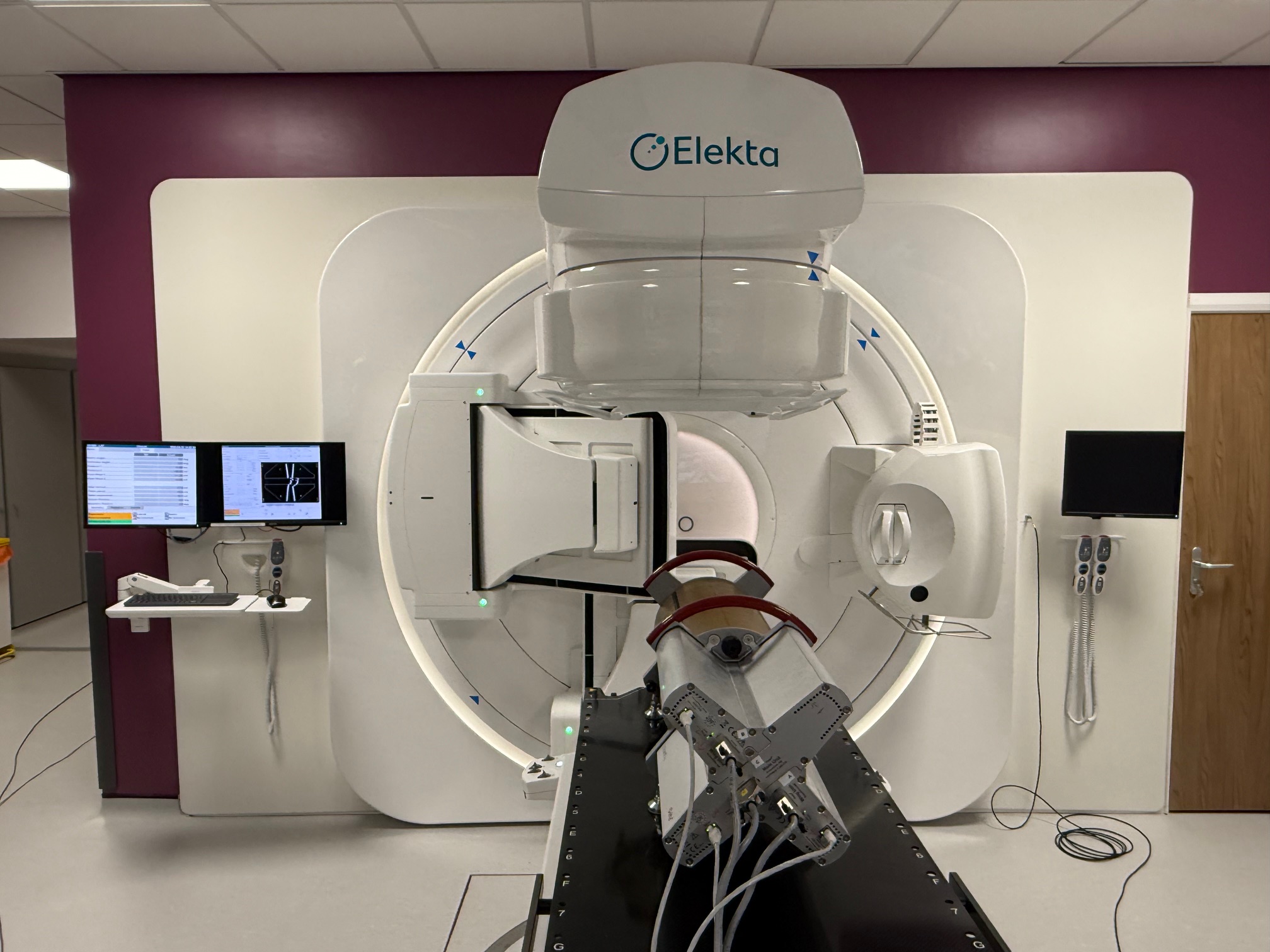
 Lancashire Teaching Hospitals NHS Foundation Trust has taken delivery of its second new state‑of‑the‑art linear accelerator (LINAC) at Royal Preston Hospital, further enhancing radiotherapy services for patients across Lancashire and South Cumbria.
The new LINAC, installed within the Rosemere Cancer Centre, forms part of a national £70 million investment to modernise radiotherapy services and replace ageing equipment across the NHS.
Nationally, the introduction of new machines is expected to prevent up to 13,000 cancelled appointments caused by breakdowns, ensuring more patients can start and complete treatment without interruption.
At Lancashire Teaching Hospitals, the additional machine strengthens one of the region’s largest and most specialised radiotherapy services, supporting patients from a wide geographical area including Lancashire, South Cumbria and beyond.
While the new LINAC replaces existing equipment, having two identical next‑generation machines creates significant long‑term benefits, particularly in preparing for adaptive radiotherapy - an evolving technology that adjusts treatment in near real time to reflect subtle daily changes in a patient’s anatomy.
Jayne Fletcher, Treatment Delivery Team Leader and Therapeutic Radiographer, explained: "While we may not initially use the full capabilities, what it does is enable us, in the background, to prepare for the next step, which is adaptive radiotherapy. In simple terms, that means we can make daily adjustments beyond millimetre accuracy and actually change the area being treated in a matter of minutes.”
She added that the technology, while promising, is still maturing: “A lot of this is AI‑driven, so manufacturers are still building and training those systems. Having two machines means our physics teams, engineers, planners and radiographers can begin that groundwork now - training, documentation and processes - so when the technology is fully ready, we are too.”
Modern LINACs allow clinicians to deliver radiotherapy with millimetre precision, shaping radiation beams to closely match the tumour while minimising exposure to healthy tissue. This can reduce side effects and improve patient comfort throughout treatment.
The Trust is already a recognised leader in surface‑guided radiotherapy (SGRT), which uses camera‑based systems rather than permanent tattoos to position patients. SGRT is now used across multiple treatment sites including breast, thorax, pelvis and brain.
Jayne highlighted the impact SGRT has had on patients and staff: “It’s made a fantastic difference - not just for patients, but for staff as well. From a moving‑and‑handling perspective, it’s much better and reduces strain.”
For patients, the benefits are immediate: “Treatments are quicker, and for most patients there’s no need for tattoos anymore. For approximately 90% of patients, treatment is now tattoo‑free.”
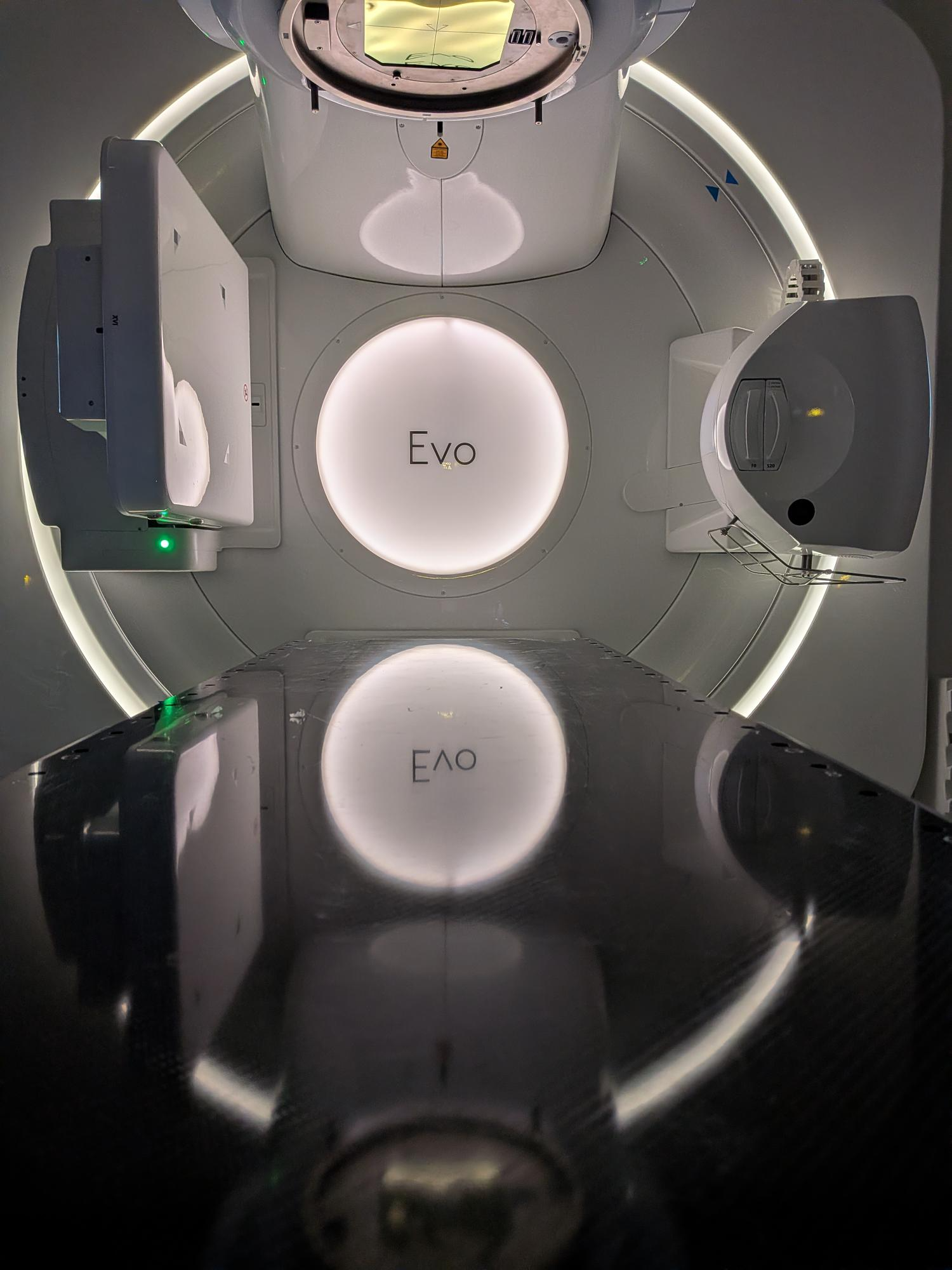 The radiotherapy service at Lancashire Teaching Hospitals is delivered by a highly skilled team of around 150 radiographers, clinicians, physicists and engineers, reflecting the complexity and scale of the service.
Jayne explained why such infrastructure is essential: “It’s not just about having the machine - you need engineers, physicists, trained staff and clinicians. It’s not easily replicated. If a single‑machine site broke down, there’d be no backup, so you need at least two machines to run a safe service.”
Recent investment has also improved the radiotherapy environment, with upgraded patient areas, additional consultation rooms and new visual artwork to help patients understand their treatment pathway.
Charitable support continues to enhance patient experience, something Jayne says makes a real difference:
“The community support is incredible. Things like the coffee shop generate funds that go straight back into the department. Extras like speakers, tablets and Spotify access are all funded this way. It’s about making patients feel more at ease.”
Looking ahead, further advancement is already under development, including improved immobilisation masks and wider adoption of SGRT across all treatment sites.
“We’re exploring more open‑face masks, particularly for patients who are claustrophobic. Even for those who aren’t, the experience can be difficult, so we’re working towards making that better.”
Although measuring long‑term outcomes will take time, feedback so far has been extremely positive: “It’s difficult to measure success rates because once patients finish treatment, we don’t always get that data back. But the feedback we’ve had is very good - it’s all moving in the right direction.”
Thanks go to senior colleagues across the Trust who supported the funding discussions and enabled a fast‑tracked approval process for the project. Their backing has been instrumental in ensuring patients across Lancashire and South Cumbria continue to benefit from high‑quality, future‑ready radiotherapy services.