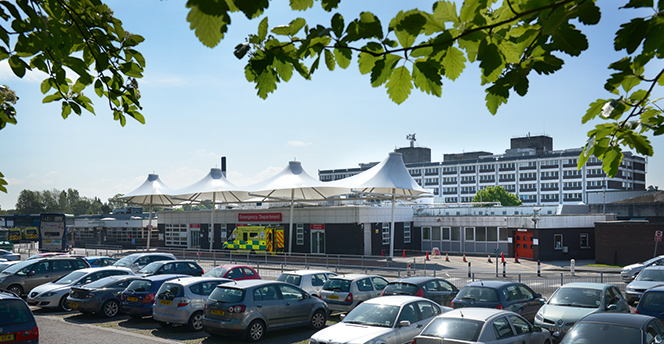
 From Monday 2 February 2026, there will be a 24/7 thrombectomy service (including Bank Holidays) at Royal Preston Hospital, which is important for improving stroke outcomes for people in Lancashire and South Cumbria.
Stroke is a leading cause of death and disability. Mechanical thrombectomy is a highly effective treatment for some acute ischemic strokes caused by blockage in a blood vessel in the brain.
An acute ischemic stroke happens when a blood clot suddenly blocks a blood vessel in the brain. This stops oxygen and nutrients from reaching that part of the brain, which can cause brain cells to become damaged or die.
Every minute counts in acute ischemic stroke care. Mechanical thrombectomy can dramatically reduce disability and improve survival when performed promptly in the right patients. Delays in treatment can lead to irreversible brain damage, so rapid decision-making and transfer are essential.
Thrombectomy is a minimally invasive procedure to remove a blood clot from an artery in the brain, restoring blood flow and reducing stroke-related disability.
Timely access to thrombectomy significantly improves patient outcomes, reducing long-term disability and mortality.
Lancashire Teaching Hospitals NHS Foundation Trust (LTH) is one of three specialist centres in the Northwest England region commissioned to provide a thrombectomy service for patients.
Further to extensive planning and recruitment, Lancashire Teaching Hospitals is pleased to update that the provision of mechanical thrombectomy services for Lancashire and South Cumbria patients will expand to a 24/7 service from Monday 2 February 2026.
Frequently Asked Questions (FAQs)
Why is thrombectomy needed?
Thrombectomy removes blood clots (blockages) from larger arteries in the brain, improving blood flow, and significantly improving outcomes for suitable patients with strokes when performed quickly after symptom onset. Not every stroke is suitable for thrombectomy, and patients are assessed and treated individually.
How many patients will benefit?
Approximatel 10 to 15% of stroke patients are eligible for thrombectomy.
Why centralise services?
Thrombectomy requires highly specialised teams and equipment, which are best provided in comprehensive stroke centres to ensure quality and safety.
What about travel times?
Protocols ensure rapid transfer to thrombectomy centres after initial assessment and thrombolysis at local stroke units when appropriate.
How does the pathway work?
Patients are assessed at the nearest stroke unit, receive thrombolysis if eligible, and are transferred to a thrombectomy centre if criteria are met.
Who is eligible?
Criteria vary depending on time from symptom onset to arrival in hospital, as well as other assessment and imaging factors. Patients are treated in line with the National Clinical Guideline for Stroke and current available clinical evidence.
Where will the service be located?
Royal Preston Hospital, as the Comprehensive Stroke Centre for Lancashire and South Cumbria, will provide the service, supported by local stroke units for initial and after treatment care and rehabilitation.