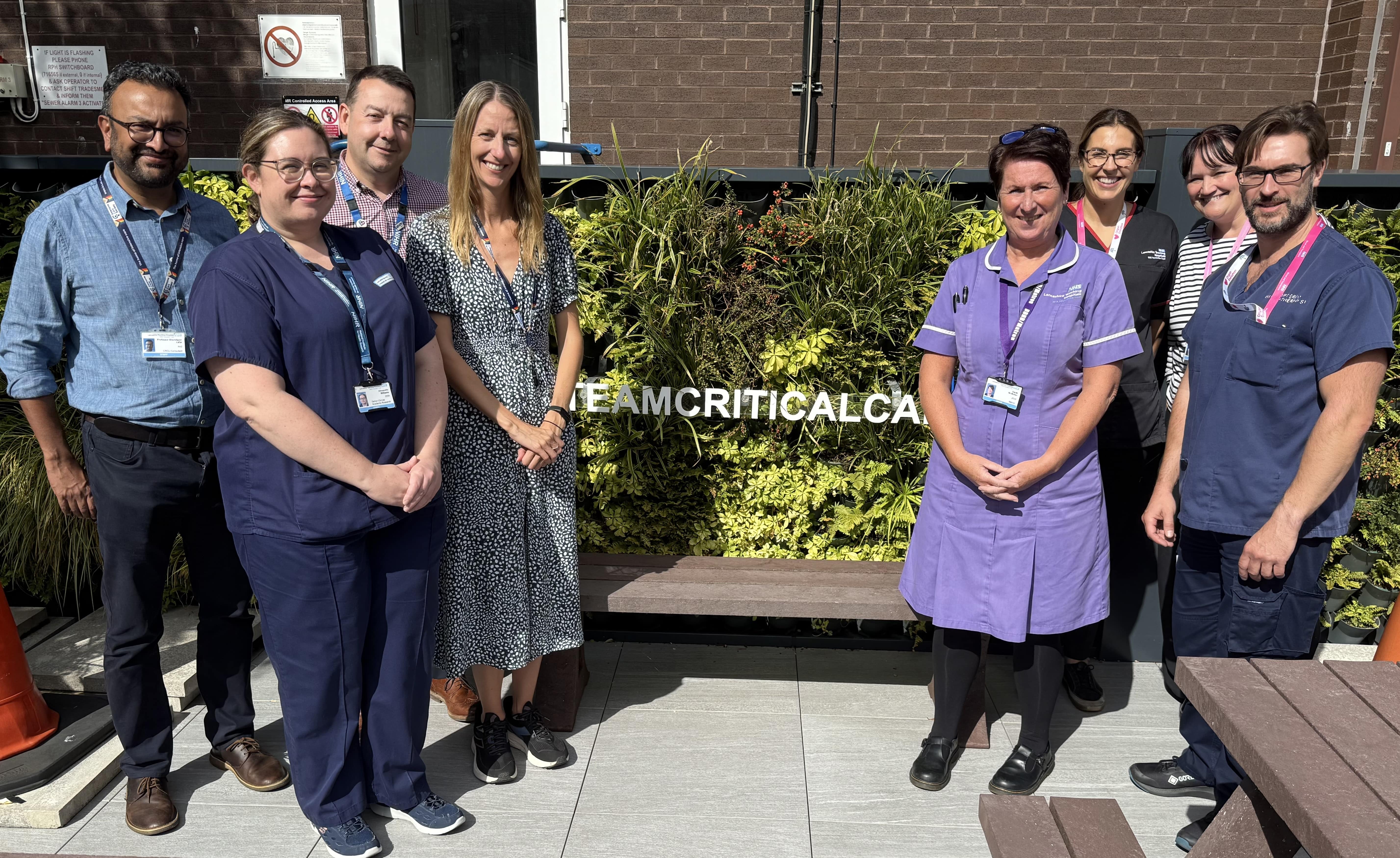
 Katie Nurcombe, Chief Executive of the Intensive Care Society (ICS), visited the Intensive Care Unit at Royal Preston Hospital last week, ahead of the UK Critical Care Research Forum in Manchester.
Katie was welcomed by Shondipon Laha, Consultant in Critical Care at Lancashire Teaching Hospitals, and President of the ICS.
Both leaders, who began their roles with the Intensive Care Society at the turn of the year, reflected on the rapid progress and innovation within the field of intensive care at the Trust, as well as the importance of connecting with frontline teams.
“It’s been a busy but exciting start to the role, and it's great to see what is happening on the ground,” Katie said. “Seeing the difference being made every day is incredibly valuable.”
Professor Laha added: "I’ve been a member of the Intensive Care Society for years, and it’s grown so much. The first eight months in this role have been great - lots to learn, lots of people to meet, and a lot to understand."
Ahead of the UK Critical Care Research Forum, it was an ideal time to show Katie around the Intensive Care Unit, with Professor Laha saying: "We’ve had quite a few successes on the unit. Before COVID, none of the infrastructure we now have existed. It's been a massive change. Our bedspaces have increased, and while we’re not quite at the level of some centres in the South, we’re punching above our weight in the North."
The pair also highlighted the James Lind Alliance Priority Setting Partnership for intensive care, which is being led by the ICS and will be discussed at the UK Research Forum. It will identify the research priorities in critical care for the next 10 years through input from patients, families, and staff.
Professor Laha outlined the Trust’s involvement in cutting-edge research and innovation: "Alongside the intensive care side of things, the ICS is very supportive of innovation, and the Trust has been working with British Aerospace (BAe), developing VR systems and difficult airway trolleys (a medical cart with specialised equipment used for managing difficulties during procedures such as intubation).
"The ICS are trying to envisage what might happen in the next 25-50 years and what we might need to support intensive care units moving forward, and we’re lucky to have industry like BAe on our doorstep, and they are keen to support local communities. They developed a version of a CPAP hood (Continuous Positive Airway Pressure) with Morecambe Bay during COVID, so there’s real potential for how we can engage with them, and with the three universities nearby as well."